Client:
Project:
Credits:
Snow Drift - Mutant
Mutant
In conversation with Javier Castán and Eoghan O’Driscoll of MUTANT
There is a point at the beginning of every creative project where nothing exists beyond an idea and the possibility of making something beautiful.
For their editorial commissioned by Hard Pack, Javier Castán and Eoghan O'Driscoll of MUTANT found that moment on a frozen lake in Finland.
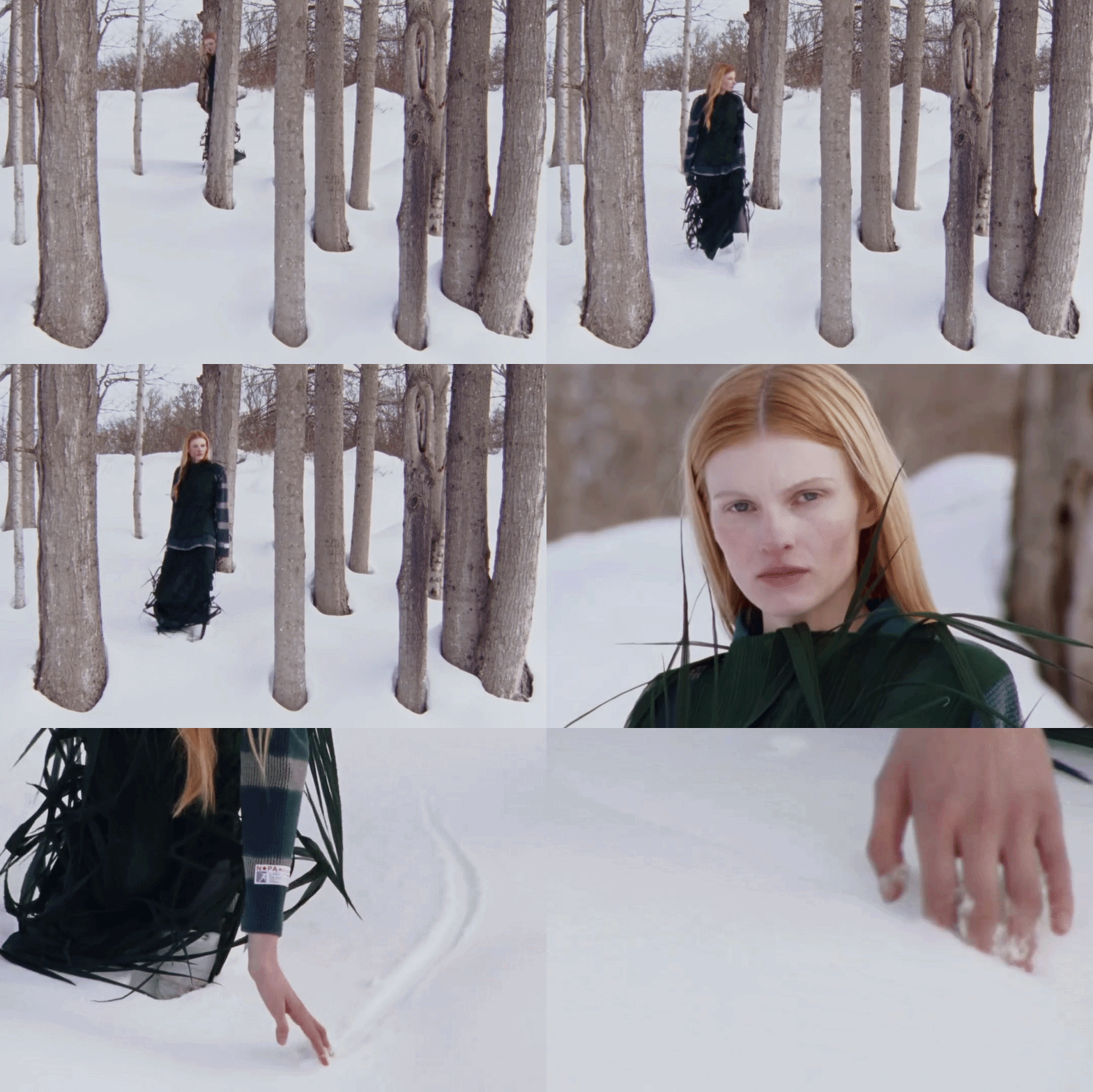
01 / A BLANK CANVAS
The starting point came from land art and the simple act of leaving a mark that complemented nature. They weren't interested in creating elaborate sculptures or imposing themselves on the landscape. What interested them was the feeling of standing in front of an empty space and asking what comes next.
JAVIER CASTÁN / MUTANT
“We've always been drawn to art in nature. We wanted to document that language explored in snow. The scale of it felt interesting. It became almost ritualistic, using handmade tools to create something in the landscape.”
The circles cut into the snow aren't presented as artworks in themselves. They feel more like traces of a process. Evidence that somebody was there, responding to the language of the landscape rather than trying to control it.
That distinction sits at the heart of the film.
EOGHAN O’DRISCOLL / MUTANT
“We wanted this feeling of being confronted by a blank canvas. What would somebody create if they were simply given the opportunity? It wasn't about making something polished. It was about that first visceral reaction to creating.”
02 / RESPONDING TO THE LANDSCAPE
Working in that environment meant accepting that not everything can be planned. The snow changed throughout the day. Light moved quickly across the landscape and every footprint altered the composition.
At one point, a cracking noise echoed through the ice on the other side of the lake, reminding everyone that the location wasn't simply a backdrop but something living and unpredictable. Rather than working against those moments, they became part of the rhythm of the project.
Watching the finished film, it's striking how little it asks of the viewer. There's no obvious narrative to follow and no desire to explain itself. It simply creates a space to observe.
The movement of a body across the landscape. The repetition of a gesture. The scale of the environment against a single human figure.
03 / FINDING THE FILM IN POST
That openness continued into post production.
EOGHAN O’DRISCOLL / MUTANT
“Especially with projects like this, post becomes so much more important. It's almost recreating something. You go in with an idea, but once you see the footage, the creation process starts again.”
That idea resonated throughout the collaboration with IMAGINE.
The edit wasn't treated as a place to assemble footage so much as a place to discover what the film wanted to become. Sequences were allowed to breathe, with pace emerging from the material itself rather than being imposed upon it.
The result is a film that feels patient and confident enough to sit in moments that might otherwise have been cut away.
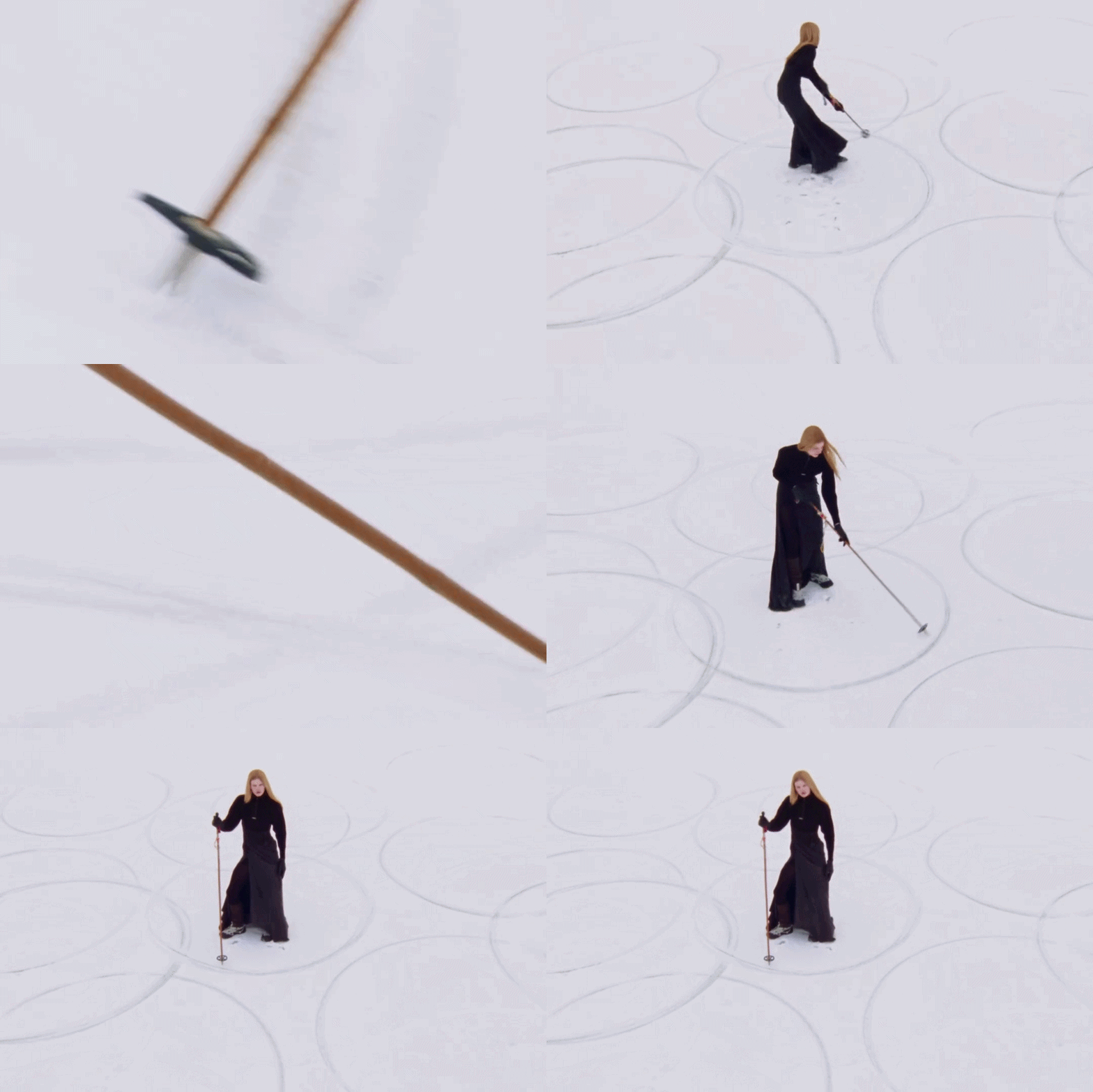
04 / COLOUR & RESTRAINT
The same restraint informed the grade.
There was no interest in making the landscape feel more dramatic than it already was. Instead, the focus was on preserving the subtle shifts in the winter light and the muted palette of the location.
Whites remain textured, shadows retain their softness, and the atmosphere never feels overengineered.
The grade gently holds the film together, giving each scene a consistency of feeling without drawing attention to itself.
05 / THE SOUND OF THE LANDSCAPE
Sound completes the experience.
EOGHAN O’DRISCOLL / MUTANT
“The sound design was incredible. It created this almost sensorial experience. It really took the film somewhere else.”
The crunch of snow underfoot, distant wind moving across the lake and the subtle weight of silence all become part of the storytelling.
Rather than illustrating the images, the soundtrack deepens them, giving the landscape a physical presence that extends beyond the film.
06 / STILL & MOVING IMAGE
The relationship between stills and motion developed in much the same way. They were never treated as separate outputs but as parts of the same conversation.
Images discovered while filming became photographs. Photographs influenced the rhythm of the edit.
EOGHAN O’DRISCOLL / MUTANT
“When photography and motion work together, you create something much richer. You're constantly building on what each other is doing, and the final body of work becomes far more coherent.”
07 / EVERY STEP OF THE PROCESS
Looking back, it's difficult to separate where one part of the process ends and another begins.
The idea shaped the shoot. The shoot informed the edit. The edit then changed the way the stills were experienced. The colour and sound added the final layer of the story.
As Javier puts it:
JAVIER CASTÁN / MUTANT
“Every single step of the process was important.”
It's a simple observation, but it feels particularly true in this case.
Nothing about this project belongs to a single moment. It has evolved through each stage of the process, with every contributor leaving their own mark.